Recipe
Rice Water — Soaked Method
The beginner-friendly, no-cook rice water preparation. Ready in 35 minutes. Works for all skin types.
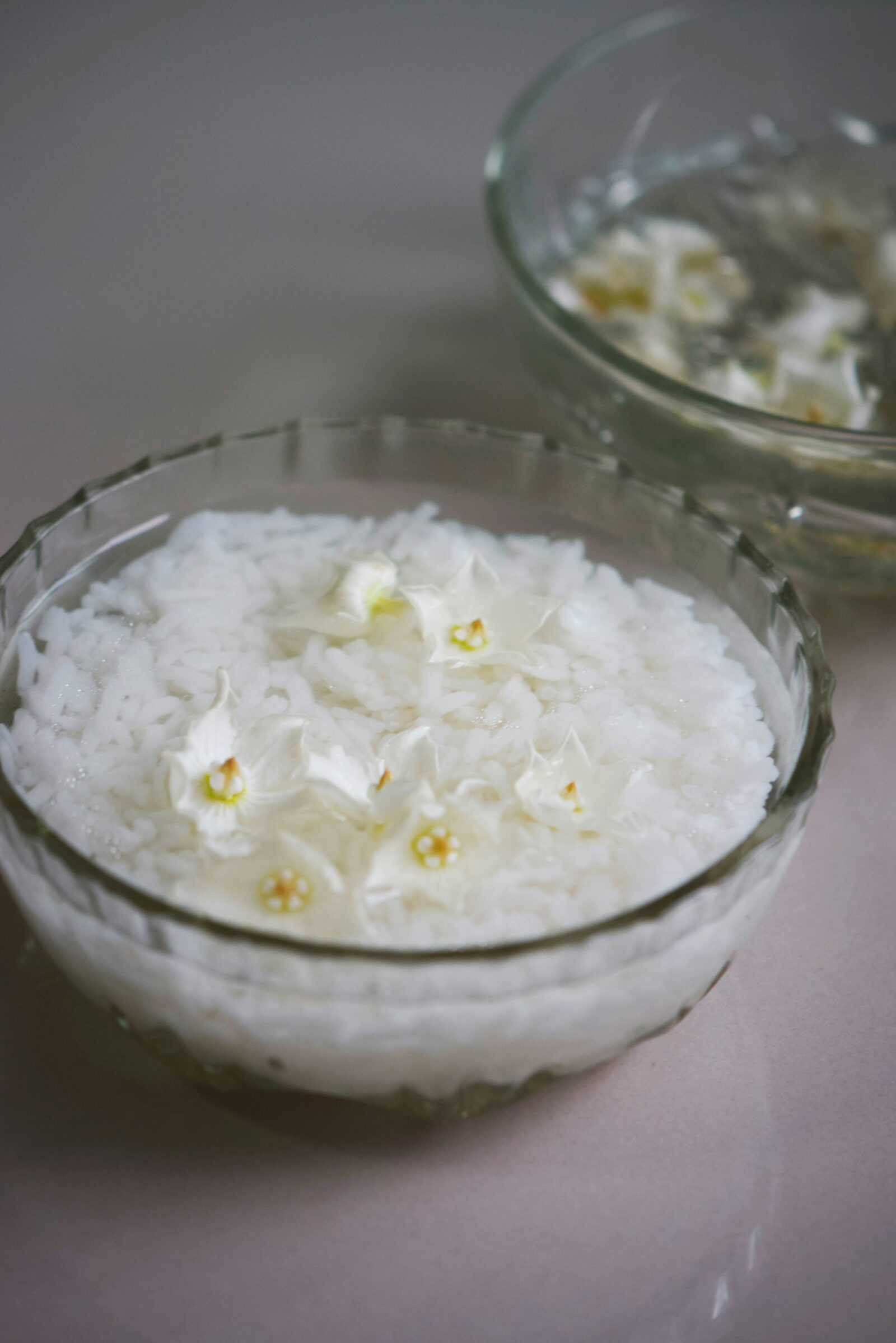
Ingredients
- ½ cup organic white rice jasmine, short-grain, or basmati all work
- 2 cups filtered water room temperature
Equipment
- Fine-mesh strainer
- Clean glass bowl
- Clean glass jar with airtight lid
The soaked method is the best starting point for rice water. It’s gentle, forgiving, no cooking required, and produces a balanced preparation that works for every skin type.
Home-remedy note: This is a DIY skincare preparation, not medical advice. Patch-test before applying to your face, and stop if any reaction occurs.
Why this method
Soaking extracts the water-soluble compounds — inositol, ferulic acid, amino acids, allantoin, and some starch — without the higher starch concentration of the boiled method or the longer timeline of the fermented method. It’s the default rice water recipe across every K-beauty and J-beauty tradition.
Step-by-step
1. Rinse the rice thoroughly (30 seconds)
Put the rice in the strainer and run cold water through it until the water runs clear. This removes surface dust, debris, and most of the surface starch that can clog pores for oily skin types.
2. Combine rice and water (1 minute)
Transfer the rinsed rice to the clean glass bowl. Pour in all 2 cups of filtered water.
3. Soak at room temperature (30 minutes)
Let it sit, undisturbed, on the counter for 30 minutes. Give it one gentle swirl at the 15-minute mark. The water will become visibly cloudy — that’s what you want.
4. Strain (1 minute)
Pour the liquid through the strainer into your clean glass jar. The rice is still perfectly good to cook — use it for dinner.
5. Refrigerate immediately
Seal the jar and refrigerate. Plan to use within 3–5 days, or pour into silicone ice-cube trays and freeze for 1–3 months of shelf life.
Tips for a better batch
- Use filtered water. Heavy tap water minerals can slightly shift pH and flavor.
- Don’t rush the soak. Thirty minutes is the extraction sweet spot. Shorter gives a weaker preparation; longer at room temperature starts fermentation (which is its own separate recipe).
- Label your jar with the date. Future-you will thank present-you.
- Silicone covered ice-cube trays are the ideal freezer-storage format. Lidded trays prevent freezer burn and odor migration.
Warnings
- Do not apply rice water to broken or actively inflamed skin.
- Patch-test on the inner forearm for 24 hours before facial use if you’ve never used rice water before.
- Watch for rice-protein sensitivity — uncommon, but real. Signs include redness, itching, or swelling at the application site.
When to choose this method over others
- Sensitive, reactive skin — this is the mildest preparation
- Barrier-compromised skin — gentle enough to soothe without added irritants
- First-time use — the safest introduction to rice water
- Everyday maintenance — reliable, predictable, repeatable
For a more concentrated barrier-supporting preparation, see the boiled method. For a more potent brightening preparation, see the fermented method.
Related
Storage
Refrigerate immediately. Keeps 3–5 days in the fridge, or 1–3 months frozen as ice cubes in a sealed container.
Frequently asked questions
Do I have to use organic rice?
No, but it's the better choice. Non-organic rice can carry pesticide residue. Organic jasmine or short-grain white rice works best. California-grown organic rice has the lowest arsenic levels.
Can I skip the rinse step?
You can, but it's worth the 30 seconds. Rinsing removes surface dust and excess starch, which reduces pore-clogging potential on oily skin.
How often should I use this on my face?
3–4 times per week, not daily. Overuse can dry skin or over-sensitize with ferulic acid.